As residents and tourists across the Emirates set their resolutions for the New Year, staying updated with UAE traffic laws is more critical than ever. The roads are changing – literally and legally.
From the bustling highways of Dubai to the capital’s structured avenues, a wave of new regulations introduced in late 2025 will dictate how we drive throughout 2026.
At CarRentalServiceDubai.com, we believe that an informed driver is a safe driver. Whether you are commuting to work or renting a luxury SUV for a weekend getaway, understanding these UAE traffic laws ensures you avoid fines and enjoy a seamless journey.
Below, we break down the 10 most significant changes, including toll updates, vehicle bans, and smart detection systems.
1. Abu Dhabi Darb Toll System: Revised Timings and Caps
One of the most impactful changes to UAE traffic laws comes from the capital. Since September 1, 2025, the Integrated Transport Centre (ITC) in Abu Dhabi has revamped the Darb toll system.
- New Timings: The evening peak hours have shifted. Motorists are now charged from 3:00 PM to 7:00 PM (Monday to Saturday), replacing the old 5:00 PM–7:00 PM slot. Morning hours remain unchanged.
- Removal of Caps: In a move to reduce congestion, the daily and monthly toll caps have been abolished. This means frequent users will pay for every passage during peak hours.
- Exemptions: Thankfully, exemptions remain for People of Determination, seniors, and low-income families.
Understanding these UAE traffic laws is vital for anyone planning a drive between Dubai and Abu Dhabi.
2. Variable Speed Limits on Sheikh Zayed bin Sultan Road
Driving in Abu Dhabi has become smarter. Since late October, a variable speed limit system has been active on Sheikh Zayed bin Sultan Road.
This initiative is a leap forward in UAE traffic laws for safety. Electronic signs now dynamically adjust the speed limit based on real-time conditions like weather, accidents, or heavy traffic. These smart signs are linked to a central control room, ensuring that the posted speed limit always reflects the safest driving speed for the current moment.
Also Read – 7 UAE Updates for November and December: New Rules, Openings and Holidays
3. Delivery Rider Ban on Dubai Fast Lanes
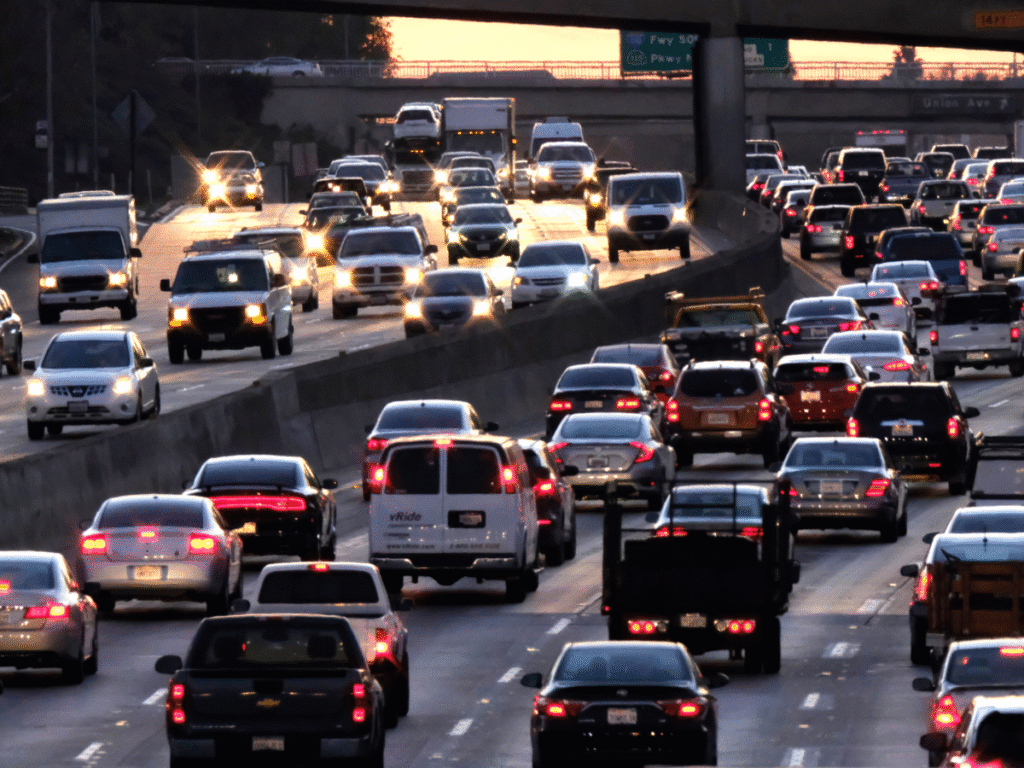
Dubai has introduced strict measures to protect vulnerable road users. As of November 1, 2025, delivery riders are banned from using fast lanes.
Under these new UAE traffic laws, delivery bikes are prohibited from the two leftmost lanes on roads with five or more lanes. On smaller roads (3-4 lanes), they cannot use the furthest left lane. This change aims to reduce the fatal accidents often associated with motorcycles in high-speed zones.
4. Dedicated Lanes for Heavy Vehicles in Sharjah
Sharjah has joined the safety initiative by enforcing dedicated lanes for specific vehicle types starting November 1.
- The Rule: The far-right lane is now exclusively for heavy vehicles and buses.
- Motorbikes: Riders are restricted from the fast left lanes and must stick to the middle or right lanes depending on the road width.
- Enforcement: Smart cameras and 24/7 radar surveillance are active to ensure compliance with these UAE traffic laws.
5. Smart Speed Limiters in Ajman Taxis
In a first-of-its-kind move for UAE traffic laws, Ajman has installed smart speed limiters in all limousines and taxis. This advanced system automatically limits the vehicle’s speed based on the specific road’s legal limit and real-time location data. This technology prevents speeding violations before they happen, ensuring passenger safety.
6. Major Truck Ban on Abu Dhabi Roads
To protect infrastructure and ease rush hour, a significant truck ban hit Abu Dhabi roads on December 1, 2025.
Trucks are now permanently banned from Sheikh Maktoum bin Rashid Road (E11) and Al Raha Beach Road (E10), with traffic rerouted to Al Faya–Saih Shuaib Road (E75). Additionally, peak-hour restrictions apply to Al Rawdah Road (E30). These adjustments to UAE traffic laws are designed to preserve bridges and reduce traffic jams for light vehicles.
Stay up to date with the latest news. Follow us on WhatsApp Channels
7. “No Passing” Solid Lanes in Dubai
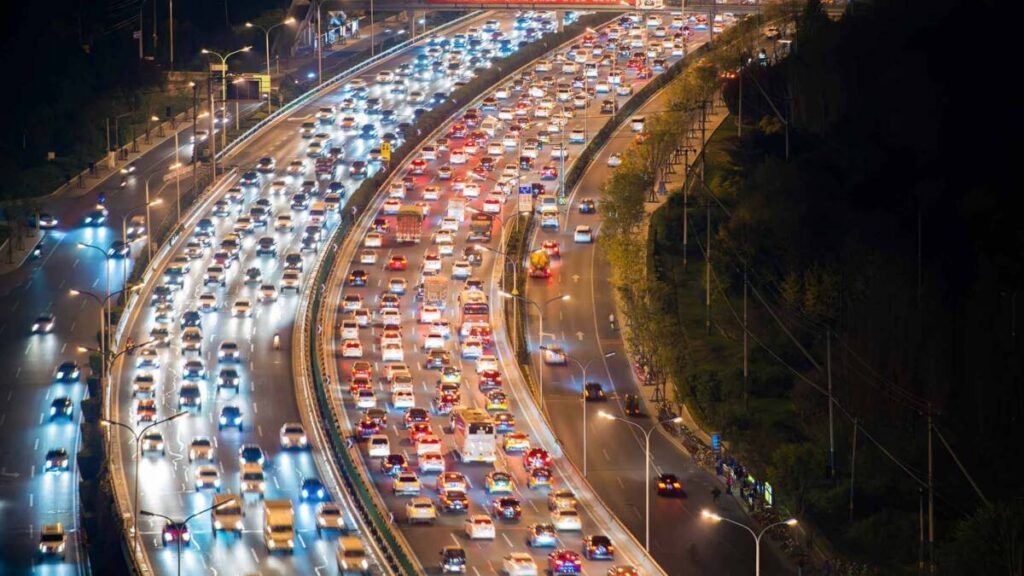
Have you noticed new solid lines on Ittihad Road or the Airport Tunnel? These are “No Passing” zones.
Under the updated UAE traffic laws, crossing these continuous white lines – whether to overtake or change lanes – is a violation punishable by a Dh400 fine. Overhead cameras have been installed specifically to catch these infractions, so stay in your lane to avoid penalties.
8. Dubai Taxi Fare Hike and Dynamic Pricing
Public transport users must also adapt to new UAE traffic laws regarding fares. The Roads and Transport Authority (RTA) has revised taxi fares for app-booked rides.
- Base Fare: Increased from Dh12 to Dh13.
- Dynamic Pricing: New peak-hour surcharges apply. For example, during weekday rush hours (8 AM–10 AM and 4 PM–8 PM), a Dh7.5 surcharge is added.
- Weekend Rates: Different peak timings apply on weekends, with higher flagfall rates late at night.
9. Instant Fines in Parking Spaces
Parking in Dubai has become strictly regulated. A new partnership between Dubai Police and Parkin allows for the instant detection of outstanding fines.
As soon as a vehicle enters a parking facility, the system scans the plate. If the car is wanted for criminal cases or has unpaid traffic violations, the police are notified immediately.
This integration of UAE traffic laws and smart technology ensures that no violator goes unnoticed.
10. 24-Hour Paid Parking at Mosques
Finally, a change that affects many residents is the new Mosque Parking regulation. Since August 2025, parking spots outside mosques have been converted to 24-hour paid zones.
- Free Window: Parking remains free for worshippers for one hour during prayer times.
- Paid Zones: Outside of prayer times, standard (Zone M) or premium (Zone MP) rates apply 24/7. This prevents the misuse of parking spaces in commercial areas.
Stay up to date with the latest news. Follow us on WhatsApp Channels
Summary of Key UAE Traffic Laws Changes (2025-2026)
| Regulation | Location | Key Change | Effective Date |
| Darb Toll | Abu Dhabi | Evening peak changed to 3pm-7pm; caps removed. | Sep 1, 2025 |
| Delivery Bike Ban | Dubai | Banned from fast lanes (leftmost lanes). | Nov 1, 2025 |
| Truck Ban | Abu Dhabi | Banned on E11 & E10; rerouted to E75. | Dec 1, 2025 |
| Taxi Fares | Dubai | Minimum fare Dh13; dynamic peak pricing. | Nov 2025 |
| Mosque Parking | Dubai | Paid parking 24/7 (except prayer times). | Aug 2025 |
Frequently Asked Questions (FAQs)
The scene is at sunset so the sky is a warm peachy orange.
Q1: What happens if I violate the new UAE traffic laws regarding solid lines?
Crossing a solid “no passing” line is considered a lane discipline violation. Under the strict UAE traffic laws, this incurs a fine of Dh400.
Q2: Are tourists exempt from the Darb toll changes in Abu Dhabi?
No. All motorists, including those in rental cars, must pay the toll. At CarRentalServiceDubai.com, we handle toll administration for you, but be aware that the daily cap has been removed under the new UAE traffic laws.
Q3: Can I use the fast lane on my motorbike in Sharjah?
No. The new UAE traffic laws in Sharjah strictly prohibit motorbikes from the far-left fast lanes. You must use the middle or right lanes to avoid fines captured by smart radars.
Q4: How do the smart speed limiters in Ajman work?
These devices are integrated into the vehicle’s computer. They read the GPS location and the road’s speed limit, physically preventing the car from accelerating beyond the legal limit, ensuring 100% compliance with UAE traffic laws.
Final Thoughts
Navigating the roads in 2026 requires more than just driving skills; it requires knowledge. These UAE traffic laws are designed to make the country safer and less congested. By staying updated, you protect your wallet and your safety.
For a hassle-free driving experience where compliance and comfort come first, trust CarRentalServiceDubai.com. Drive safely and follow the rules!
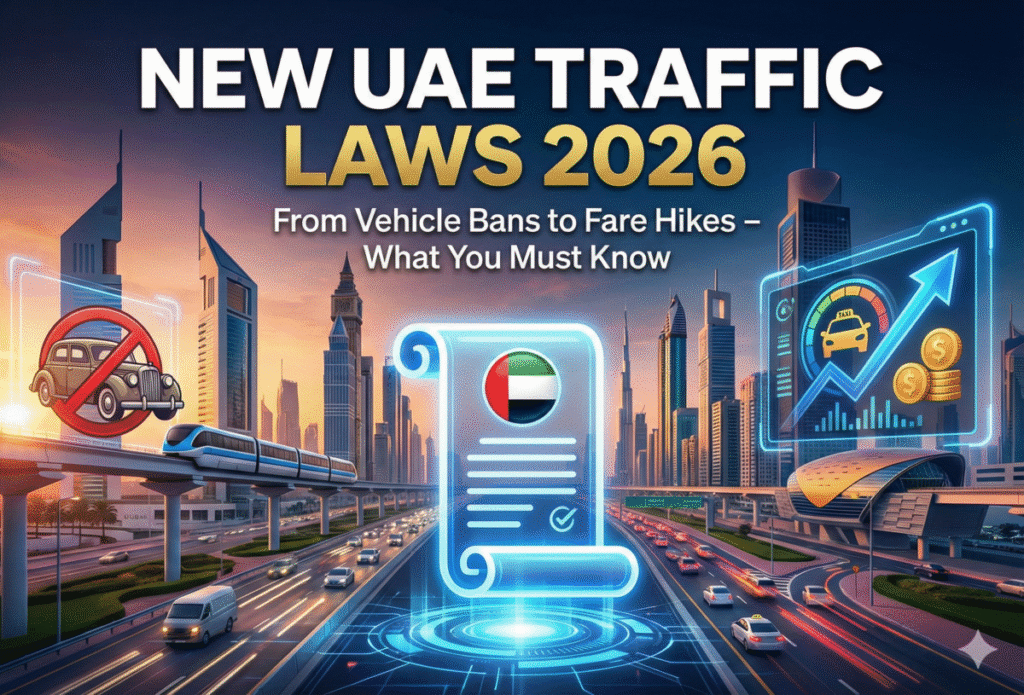
Also Read – New UAE Traffic Laws 2026: From Vehicle Bans to Fare Hikes – What You Must Know